Every loose item sold by weight asks a person to remember a number or find a PLU. A shopper at self checkout or an in-aisle scale, a picker filling an online order at 2am, a colleague behind the prepared food counter: each is expected to know that an avocado is one code and an organic tomato is another. Then find it in a seemingly infinite list of products. Most of the time they get it right. When they don't, the cost lands in more places than most retailers measure.
The obvious cost is at the till. The customer pays the wrong price, or waits while a colleague is called over. The colleague loses time they don't have. Neither walks away happy.
The less obvious cost is in the stockroom. Every wrong selection sells one item and depletes another. Inventory drifts away from reality, and ordering suffers with it: too much of what was wrongly sold, too little of what actually left the store. That shows up as waste on one shelf and a gap on the next.
And some of it is not a mistake at all. Picking a cheaper item on purpose, or printing a carrot label and sticking it on a steak, is one of the oldest tricks in the book. Your steak turns into an avocado, and nobody notices until the stock count.
This is not a niche problem. The latest ECR Retail Loss study on self-checkout found that roughly 2% of transactions through the produce lookup menu generate a loss: the wrong code, the wrong weight, or the wrong item.
In fresh food, the stakes go beyond money. Undeclared allergens caused 49.2 percent of the 313 US food recalls in 2023, according to PIRG's Food for Thought 2024 report. Most of those recalls start at the manufacturer, but the same mistake can happen when fresh food is prepared and labelled in store. Here in the UK, Natasha's Law has required full ingredient labels on food pre packed in stores since 2021.
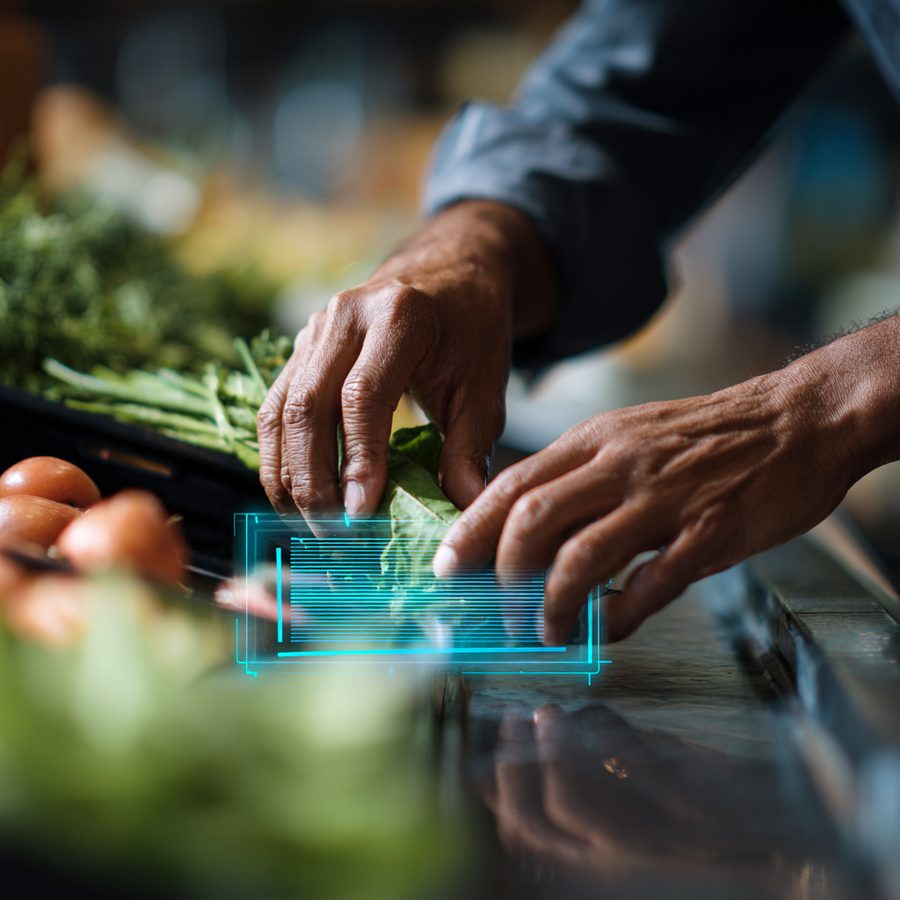
Produce recognition removes the memory aspect. A camera above the scale sees what is being weighed and puts the right item on screen, or flags it when the selection doesn't match. Every deployment runs on the scales themselves, with no servers required. Here is what that looked like at three grocers, each solving a different problem.
A UK grocer: faster pickers at night, happier shoppers by day
The problem. One of the UK's largest grocers uses the same self-service scales for two different jobs. Overnight, online order pickers weigh loose fruit and veg against the clock, with hundreds of orders to fill before the vans leave. By day, shoppers weigh and label their own produce. Both groups were scrolling through menus of barcodeless items to find the right one, and both made mistakes. A wrong pick at night meant a substitution, a refund or a stock error the next day. A wrong label in the day meant frustration, or a quiet loss.
The solution. We added produce recognition to around 1,200 scales the grocer already had, with no new hardware. The camera identifies the item and puts the right match on screen, so the picker or shopper taps once instead of searching.
The results.
- 99.9% labelling accuracy
- Mislabelling at the scale down 95%, including barcoded item fraud
- Six figure savings in shrink
- Six figure savings in picker hours, with inventory accuracy up
- 20%+ more scale usage, with higher throughput and customer satisfaction
That is across more than 60 million transactions in twelve months. One model, two audiences, one estate: speed and accuracy for colleagues at night, and an easier scale for customers in the day.
A US natural grocer: the right label, every time
The problem. Not every scale faces the customer. At a US natural and organic grocer, colleagues weigh and label fresh packed food and bakery items behind the counter. Here a wrong selection is not just a pricing error. A pastry labelled as the nut free version, or a prepared meal printed with the wrong ingredients list, can put a customer with an allergy in real danger.
The solution. We put produce recognition in the hands of staff rather than customers. When a colleague places an item on the existing service scale, the system identifies it and checks it against the label about to be printed. If they don't match, the label doesn't go out until someone looks again.
What changed. Every label is now checked against the item on the scale before it prints. A mismatch stops the label, not the customer.
For this grocer, the business case was never only about shrink. It was about making sure what the label says is what's in the box.
A US grocer: fewer wrong selections
The problem. A leading US grocer with a loyal customer base and a big fresh offer was seeing too many wrong selections at the produce scale. Some were honest mistakes, some were not. Either way, shoppers waited, staff were pulled away from the floor, and the stock file stopped matching the shelf.
The solution. Produce recognition added to the scales already in store, suggesting the right item first and flagging a mismatch when the selection and the item on the scale don't agree. Staff are only called when it matters.
What changed. Shoppers get the right item suggested first, and staff are only called when the selection and the item don't match. The grocer has since rolled it out across its main estate, and chose to extend it to a second store format, replacing scales to do it.
What the three have in common
Three grocers, three different problems: speed, accuracy, safety. The fix was the same in each. Stop asking people to remember a code, and let the scale see what is on it, using the hardware already in store.
If you are weighing up produce recognition, three questions are worth asking
- Who is using the scale? Shoppers, pickers and counter staff need different things from the same screen.
- What does a wrong selection cost you? Count the waste and the stock errors, and customer safety, not just the till loss.
- What happens when the item and the selection don't match? A suggestion helps the honest majority. A mismatch flag is what stops the steak becoming an avocado.