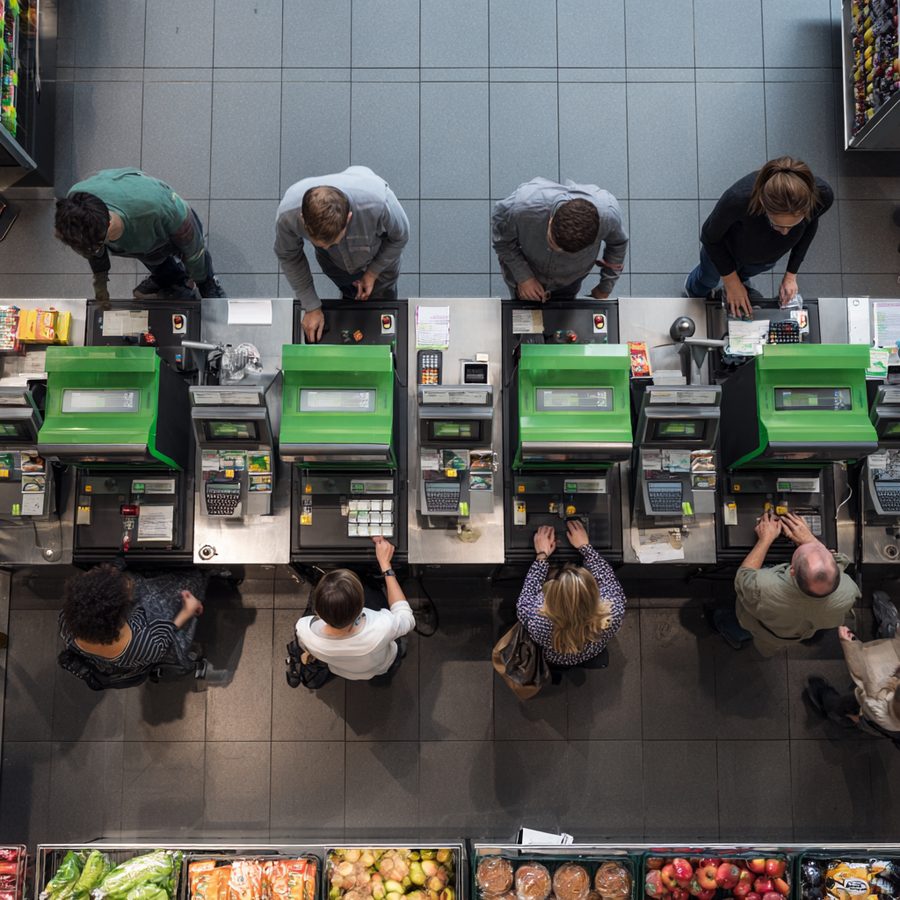
Every vendor in my industry publishes the same number: how much loss their system "detected". Millions, sometimes tens of millions. I run one of those companies, and I want to say something uncomfortable about that number. On its own, it is worth almost nothing.
There is no shortage of loss to detect. The latest ECR Retail Loss study, covering 39 retailers with over a trillion euros in combined turnover, found missed scans in 1 to 4.8 percent of self-checkout transactions, and store losses rising 22 percent on average in the first year after self-checkout is introduced.
But a retailer does not earn a cent from detection. It earns money when the item that was not scanned gets scanned and paid for, before the shopper leaves the store. That is called recovery, and almost nobody publishes it.
At the start of this year our system was running in six stores of a US grocery chain. Today it runs in more than forty, across several hundred self-checkout lanes, and the next phase under discussion would double that again. I want to tell you what happened to that number along the way, including the part we were not proud of.
Two numbers, only one that pays
Detection: the system saw an item go into a bag without being scanned, and raised an alert. Recovery: a staff member or the shopper scanned that item because of the alert, and it was paid for. The metric we track is simple. Of the alerts that were correct, how many items were recovered. You can detect brilliantly and recover badly, and the retailer ends up with a handsome report and no money.
What happened to us
In the first quarter of the year, our first six stores were recovering well over half of the items that were correctly flagged. A good number. Then, in the second week of March, with no change to the system, recovery fell to under half in a single week.
The first thing we checked was the model. It had not changed, and detection in those stores had not slipped. The system kept flagging transactions at the same rate, and the share of transactions with confirmed loss was still falling, as it had been since January. So less loss was happening, and the system was still seeing it. What broke was the three seconds after the alert: whether a staff member walked over, what they said to the shopper, and whether the item went back to the scanner.
Then something happened that made the picture clear. In the second quarter, 26 new stores went live. In their first weeks, they recovered more than the first six stores did. The stores with the most experience of the system were recovering the least.
The explanation turned out to be simple. The new stores went live with a defined floor process: who responds to an alert, how quickly, and what to say to the shopper. In the older stores, after a few months, that process had worn away. People changed, the alert became one more sound in the background, and the system carried on detecting into thin air.
ECR found that shoppers self-correct after an on-screen prompt in 80 to 97 percent of cases. The rest are exactly the cases that need your staff.
What we did, and what it produced
We did not change the model. Together with the retailer's loss prevention team, we took the process the new stores were running and made it the standard in every store. We added an automated weekly report for each regional manager, so that recovery in their stores became a number they see, and can act on, not just a number we see. And we trained the store teams on the dashboard, so they could tell for themselves which lanes were recovering and which were not.
Recovery climbed every month from April to September, and over that period it rose by about three quarters. The retailer's own business case had assumed 68 percent recovery; by September, every reported week was above it. The share of alerts that staff handled correctly, which we measure separately from the model's accuracy, rose as well. And across the whole estate, the share of transactions with confirmed loss ended the period about a third lower than it started the year. Less loss is happening, not just more being caught.
All of this without a single new line of code in the model. The biggest gain in the programme came from process, not technology. As a technology vendor, that is not the most comfortable sentence for me to write. But it is what the data says.
We are not alone in that finding. The NRF's Impact of Theft & Violence 2026 report records the first fall in shoplifting incidents in years, down 12.4 percent in 2025, and credits it to investment in technology and employee training together, not one without the other.
Three questions to ask before you sign
If you are a retailer evaluating a system like this, these are the questions that, in our experience, separate a handsome report from money at the till.
- What is the recovery rate, not the detection rate? If the vendor cannot answer, or answers only about detection, that is an answer.
- How is it measured? At Edgify: items recovered divided by alerts that a human reviewer confirmed were correct, on a manually reviewed sample, always on summed totals for the period and never an average of percentages. Ask for the definition in writing.
- What happens after the alert, and who owns it? The model is half the job. The other half is a staff member who walks over, the right sentence to the shopper, and a manager who sees the number every week. The alert is part of the shopper's checkout, not a security step bolted on to it, and stores get out of it what they put in. The vendor has to be a partner in that half too. Otherwise you will get what our first stores got in March: in those six stores alone, the gap between their recovery rate and the new stores' rate was worth about a fifth of everything they recovered in the quarter that followed.